


Connecting Tradition to Practice: The AfroEcology Intensive Training Initiative

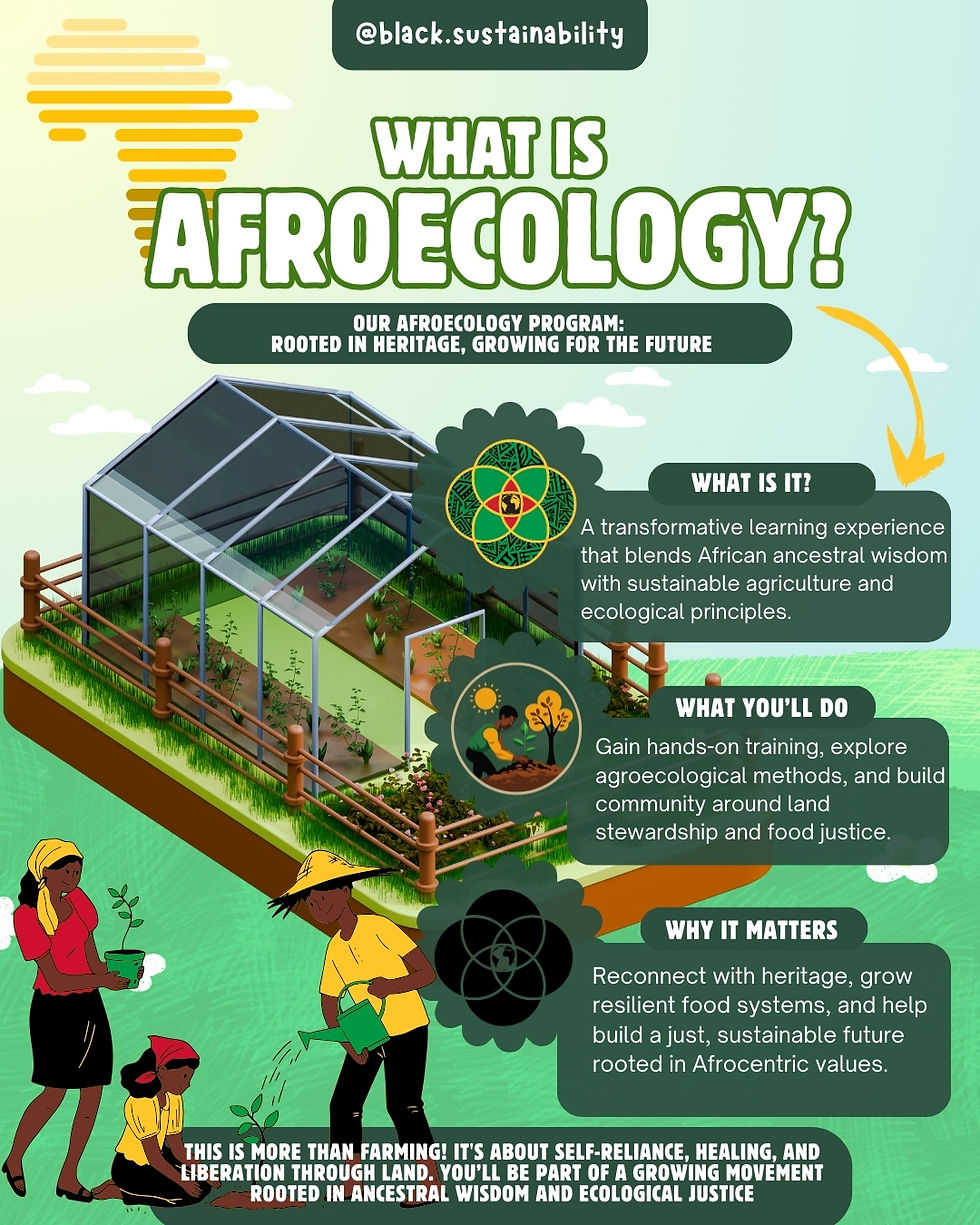
This year, Black Sustainability Inc. introduced a new part of our AfroEcology Series: the AfroEcology Intensive Training. This initiative offered farmers, land stewards, and community members a chance to learn about ancient farming practices through an AfroIndigenous lens. Three separate groups from different regions came together to share personal reflections on their ancestry, heritage, and deep connection to food and land stewardship.

The goal of these sessions was to inspire, educate, and build knowledge around sustainable farming and community connections. Beyond group discussions, participants engaged in meaningful reflection on ancestral heritage and traditional farming methods. To wrap up their experience, participants presented "teach-backs" of what they learned in their own words and reconnected with local growers across the Black Sustainability Network.
Connecting Traditional Knowledge with NRCS Conservation Standards
A central part of the Intensive was showing how ancestral Afro-Indigenous ecological knowledge connects directly with official USDA Natural Resources Conservation Service (NRCS) conservation standards. Participants explored key NRCS practice codes that reflect traditional earth-care methods, including:
Cropping & Soil Management: Cover Cropping (Code 340), Mulching (Code 484), Residue & No-Till Management (Code 329), Multi-story Cropping (Code 379), and Alley Cropping (Code 311).
Water & Land Stewardship: Contour Farming (Code 330), Microirrigation (Code 441), High Tunnel Systems (Code 325), and Riparian Herbaceous Cover (Code 390).
Forestry & Nutrient Management: Prescribed Burning (Code 338), Forest Stand Improvement (Code 666), Composting Facilities (Code 317), and Nutrient Management (Code 590).
Learning these practice codes helps land stewards access conservation funding programs like EQIP (Environmental Quality Incentives Program) and creates pathways to become certified NRCS Technical Service Providers (TSPs), turning traditional ecological practices into recognized, funded community work.

As we finish this year's regional and local programs, this is only the beginning of what the AfroEcology Intensive has to offer. We will continue building connections for beginning farmers, experienced growers, and community advocates alike. Stay tuned for future learning opportunities, no matter where you are located!


Comments