
Bridging Tradition and Conservation: AfroEcology Meets NRCS + Technical Assistance


We recently wrapped up our virtual learning series on AfroIndigenous Farming and NRCS Practices which concluded on July 16. This series was an incredible opportunity to connect ancestral agricultural wisdom with modern conservation programs. Over the course of the sessions we explored how traditional land care matches up with formal federal conservation standards. The goal was to give growers the knowledge needed to access resources while staying true to ecological traditions.
Connecting the Past to the Present
This series built directly upon our past AfroEcology programs. We focused heavily on how traditional growing methods are not just historical concepts but active solutions for modern climate challenges. We explored deeper into indigenous farming techniques that prioritize soil health, biodiversity, and water management. By looking at these time tested practices alongside Natural Resources Conservation Service standards, attendees learned how to get financial and technical support for things they may already be doing on their land or to consider for those new to farming.
Key Conservation Standards Discussed
During the presentations we focused on specific federal standards that align perfectly with sustainable and traditional growing. We broke down how these practices work and how growers can get support for them:
Forestry and Fire Management (Codes 338, 666, 314): We looked at how cultural burns for fire ecology and land renewal treat fire as a tool rather than an enemy. We also covered selective tree cutting methods and brush management to control woody growth.
Soil and Water Protection (Codes 330, 555, 484, 329): We explored the rich history of Incan terraces, West African stone bunds, and rock walls built across slopes to capture soil and water. We also looked at crop residue management and modern mulching techniques, which mirror ancestral methods like the Three Sisters planting where squash acts as a living mulch.
Cropping and Agroforestry Systems (Codes 379, 340, 311): This highlighted multi story cropping, alley cropping, and cover cropping. These systems combine overstory trees with understory crops, drawing inspiration from traditional companion planting and Ethiopian seed saving methods.
Water, Irrigation, and Biology (Codes 441, 390, 649, 660): We shared how modern microirrigation connects to ancient Hohokam canal systems and Pueblo light dams used for water redirection. We also discussed riparian covers, tree pruning techniques like coppicing to renew wood supply, and building specific structures to support wildlife habitats.
Waste and Nutrient Management (Codes 317, 590, 595): This focused on composting and integrated nutrient systems. We looked at historical examples like Aztec Chinampas mud islands, shell middens, and natural pest management strategies that use the surrounding ecosystem to maintain balance.
From Screen to Soil
While the virtual presentations gave us a solid foundation, the real magic happens when we see these practices applied in person. Seeing these conservation standards in action on regional farms bridges the gap between digital learning and physical land stewardship. It allows our community of growers to witness how soil health systems, cover cropping, and traditional water systems look in real life.
Thank you to everyone who logged on, asked questions, and shared their own experiences. We are excited to see how these practices continue to take root across our community farms.
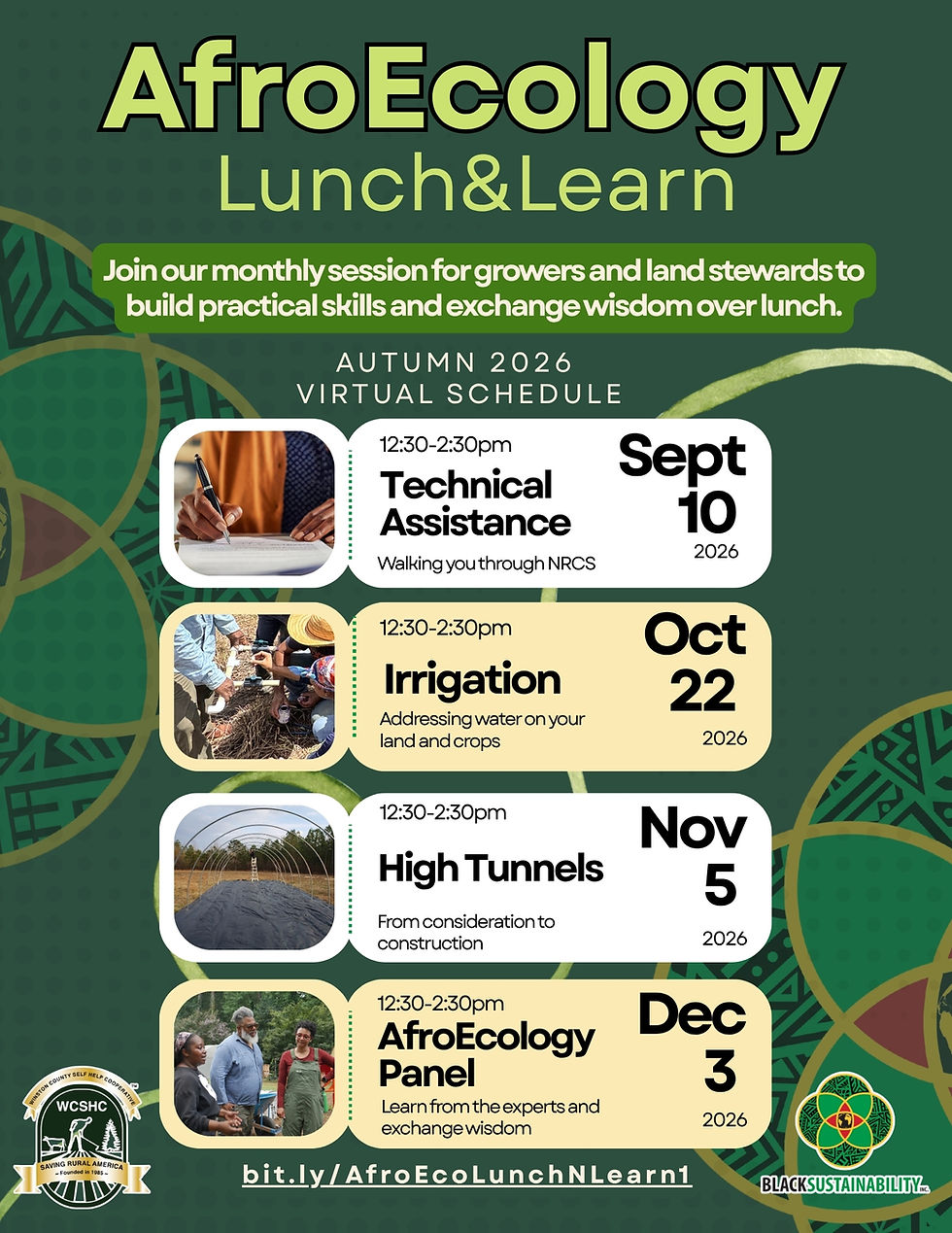
Stay tuned for our upcoming farm field days, tours and hands on workshops where we will continue to explore these techniques live on the land.
Comments